
Aspiration pneumonia and aspiration pneumonitis look like the same condition. And both are linked to material(s) entering the lungs. At first glance, you might not spot the difference. So here’s a quick picture.
You know those times, a doctor asks patients not to eat before a medical procedure? It’s because they are primarily trying to avoid aspiration of stomach contents, which can cause aspiration pneumonitis (chemical lung injury). And this can also lead to aspiration pneumonia if infection develops later.
Why Should this Concern You?
It’s not just that aspiration pneumonia and pneumonitis look alike; it’s that their signs mirror each other. Without the full patient history, it can be hard to tell them apart. Plus, the tests don’t always give a quick yes/no, and the wrong label can lead to the wrong treatment.
Too often, the result is uncertain, hence antibiotics are started “just in case”. A mismatch can cause wasted treatments, longer hospital stays, and more stress for families.
To stay ahead of things and spot the clues that point to pneumonia or to pneumonitis, let’s get to the big picture:
Aspiration + Pneumonia
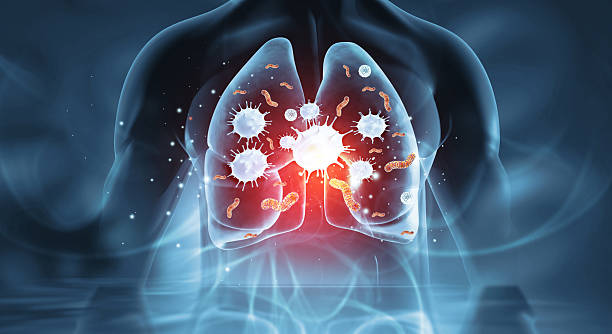
Aspiration occurs when foreign particles get into the lungs. These particles can be food, drinks, snacks, drugs, oil, vomit, gasoline, stomach acid, or other similar particles.
When some foreign material is aspirated, it goes into the lungs through the trachea (the windpipe) and, as such, is toxic to the lungs.
The aspirated material can cause infection, chemical injury, or both.
Pneumonia is an acute inflammation of the lung tissues distal to the terminal bronchioles.
When pneumonia occurs, the alveoli and the surrounding tissues are infiltrated by inflammatory cells. These cells are carried in fluids and exudates, and this “infiltration” is called lung consolidation.
Aspiration can cause different syndromes depending on the type and volume of the aspirated material, how often aspiration happens, and individual factors that predispose the patient to this condition. (Gamache et al., 2024).
Types of Aspiration Syndromes
- Aspiration Pneumonitis: Also called chemical aspiration. It is an inflammation of the lungs after inhaling gastric contents. It often starts suddenly after a vomiting or reflux event.
- Aspiration Pneumonia: Also known as infective aspiration. It occurs when bacteria from the mouth or throat enter the lungs. It starts more slowly, and the patient may need antibiotics.
- Exogenous Lipoid Pneumonia: It results when oils or oily substances (eg, mineral oil or vegetable oil, oil-based laxatives) are inhaled. The lung inflammation here is chronic and is hard to clear. It often occurs when food or drug substances being swallowed go the wrong way and into the windpipe.
- Chronic Recurrent Aspiration Syndrome: This syndrome happens when there is repeated small inhalations over time, especially in people with swallowing problems. Patients with this condition often have repeated infections and long-term lung damage.
- Acute Airway Obstruction: This is an acute respiratory emergency. It is the aspiration of a foreign body that causes immediate choking, infection, or delayed pneumonia if not removed.
What is Aspiration Pneumonia?
Aspiration pneumonia is an infection of the lungs that occurs when bacteria enter the lungs from the mouth or throat. It can also result when particles enter the lungs and cause an infection there. Because aspiration pneumonia is caused by bacteria, you will likely need antibiotics to treat it.
There are community- and hospital-acquired pneumonias.
The community-acquired type is caused by aspiration of food or oral secretions in the home or living environment. While hospital-acquired pneumonia occurs when bacteria colonies in the oral or pharyngeal cavity or stomach are aspirated into the lungs, especially in intubated, sedated, or critically ill patients.
What is Aspiration Pneumonitis?
Aspiration pneumonitis (also called chemical pneumonitis or Mendelson syndrome) is an inflammation of the lung tissues due to inhaled stomach contents or other irritants. It is an acute lung injury and not primarily an infection.
However, the gastric contents/acid aspirated may contain infective organisms, such as oral anaerobes or gram-negative microorganisms, and, as such, can lead to an infection (aspiration pneumonia).
What does food or water have to do with anaesthesia and aspiration pneumonitis?
Coughing and vomiting are protective reflexes. When general anaesthesia is given, it “silences” these reflexes.
Your doctor or health practitioner may ask you to fast before general anaesthesia and major medical operations because some of these procedures can stimulate vomiting once you are weaned off the drugs.
So if you don’t eat, there’s nothing to vomit, and when your protective reflexes (coughing and vomiting) come back, you’re entirely safe.
Most cases of aspiration pneumonitis improve with supportive care within 24 – 48 hours, however, severe cases may require intensive care support.
Here’s what the cascade of events looks like
- The particle obstructs the airways
- The individual struggles to breathe
- Respiratory distress sets in within 1 hour
In severe cases, aspiration pneumonitis can progress to
- Acute respiratory failure
- Acute respiratory distress syndrome (ARDS), and,
- In severe cases, death if not treated promptly.
BUT, the patient has a better prognosis (chance of survival) if the condition is spotted early.
Things to Note about Aspiration Pneumonia & Aspiration Pneumonitis
- Aspiration pneumonia and aspiration pneumonitis are different lung problems that result from inhaling material into the airways.
- They both have a similar clinical presentation.
- The severity of aspiration pneumonitis or aspiration pneumonia depends on the nature and size of the inhaled particles.
- Uncomplicated aspiration pneumonitis does not require antibiotics (Emergency Care BC, Provincial Health Services Authority, 2021).
- Secondary bacterial infection may require antibiotics. And patients may present with secondary bacterial pneumonia after the initial event.
- Antacids, H2-receptor antagonists, and proton pump inhibitors may increase the risk of bacterial aspiration pneumonia.
- The risk of aspiration is inversely proportional to GCS (Marik, 2001). So a patient with reduced consciousness is likely to aspirate particles into their lungs.
- Small amounts of material are aspirated from the mouth during sleep. Still, no disease occurs in healthy persons because the aspirated material is cleared by mucociliary action and alveolar macrophages.
Aspiration Pneumonia vs Aspiration Pneumonitis
| Aspiration pneumonia | Aspiration pneumonitis |
| It is an infection caused by bacteria from the mouth or stomach | It is a chemical injury caused by sterile gastric contents |
| Develops more gradually (over days) | Occurs rapidly (within hours) |
| Antibiotics is usually required | Antibiotics is usually not needed |
| Fever is common | Fever is less common early into the condition |
Risk Factors
Aspiration pneumonia and aspiration pneumonitis commonly occur in people with
- Altered levels of consciousness
- Recovering from a seizure
- Neurological problems like stroke, seizures, CNS mass lesions, Parkinson’s disease, dementia, and Myasthenia gravis.
- Alcoholism
- Drug intoxication or overdose
- Head injury
- Poor oral hygiene, poor dentition, or periodontal disease
- General anesthesia, sedation and intubation of the airways
- Chronically impaired airway defense mechanisms, eg:
- Gag reflex
- Coughing
- Ciliary movement, and
- Immune mechanisms.
- * All of these mechanisms help remove infectious materials from the lower airways; hence, aspiration results when they are impaired.
- Bed-bound patients or those in critical illness
- Dysphagia
- GERD (gastroesophageal reflux disease)
- Tube feeding
- Advanced age
* Dysphagia and stroke are the most common causes clinically.
Pathophysiology – How Does Aspiration Pneumonitis Occur?
The stomach contents are very acidic, with a pH of 1.5 – 3.5, due to the presence of hydrochloric acid. This acid helps digest food and kill pathogens.
After eating, the pH can increase to 4.5 – 6.0 for just that moment because the food buffers the acid. But it drops back down as digestion continues.
When there is reflux, this acidic juice can go up the oesophagus, sometimes reaching the throat, trachea, and lungs.
Now, the acidity of the stomach juice can cause chemical burns to the tracheobronchial tree. Resulting in inflammation and sometimes infections.
Over the years, aspiration of gastric contents with pH less than 2.5 and in sufficient volume has been associated with increased risk of pneumonitis. But, the severity of the injury varies between persons.
Signs & Symptoms
A patient with any of the aspiration syndromes can be mildly ill and ambulating or critically ill with signs and symptoms of septic shock and/or respiratory failure. Symptoms of aspiration pneumonitis usually develop within minutes to a few hours, while aspiration pneumonia develops over 2 – 3 days or longer. They include:
- Choking
- Breathlessness
- Sudden shortness of breath
- Fast breathing rate
- Respiratory distress (which can occur 2 to 5 hours after aspiration)
- Fever or hypothermia
- Non-productive cough or cough with bloody/frothy sputum
- Abnormal lung sounds, eg, diffuse wheezes/crackles, rhonchi
- Signs of poor oral hygiene
- Fast heart rate
- Low oxygen levels – Hypoxemia and cyanosis
- Altered mental status
Severity Depends on the Level of
- Patient dyspnea (subjective and objective measures)
- Patient factors (comorbidities, age, cardiorespiratory diseases, immunodeficiencies, etc.)
- Vital signs
- Wheezes and/or crackles on auscultation
Diagnosis
- Chest X-ray
- CT Scan
- Arterial Blood Gas (ABG) Analysis: This shows the partial pressures of O2 and CO2.
Diagnosis of aspiration pneumonia and pneumonitis can be made through the above means. But, there is no single test that definitively distinguishes pneumonitis from pneumonia. Hence, diagnosis is based on clinical history, timing, and progression.
Treatment
- Oxygen therapy through a nasal cannula or mask
- Suctioning to remove aspirate
- Bronchoscopy to clear large obstructions
- Intubation and mechanical ventilation, if there is severe respiratory compromise
- Gastric decompression with a nasogastric tube to prevent recurrent aspiration
- Surgical drainage of the abscess, if necessary.
- Antibiotics: Used only when an infectious organism is involved. Antibiotics are not routinely recommended for aspiration pneumonitis unless there is evidence of bacterial infection or if the patient fails to improve after 48 – 72 hours.
- Positive End-Expiratory Pressure (PEEP): Administered if the patient cannot maintain adequate oxygenation despite a high fraction of inspired oxygen.
* Aspiration pneumonitis can rapidly progress to respiratory failure. If you notice any signs or symptoms of aspiration pneumonia or aspiration pneumonitis, report them to the hospital promptly so the condition can be managed appropriately.
Prevention

- Avoid oral feeding for individuals with known swallowing dysfunction; instead, use a soft meal in bite-sized portions or a special thickened-liquid diet. Medications can be crushed and given this way, too.
- Position patients (especially bedridden/unconscious patients) upright when feeding and maintain the head of the bed elevated at 30 – 45 degrees.
- GI and J tubes used for people with severe dysphagia (swallowing problems) do not decrease the risk of aspiration pneumonia. Hence, they should be routinely monitored.
- Avoid oversedating patients.
- Good oral hygiene, especially in older adults with dementia and stroke.
Physiotherapy for Aspiration Syndromes
Physiotherapy plays a supportive role in improving secretion clearance, lung expansion, and preventing complications, but it does not treat the underlying aspiration injury itself.
Physiotherapy for aspiration pneumonitis uses techniques like
- Proper positioning and postural drainage
- Chest physiotherapy
- Breathing exercises (PEEP, deep breathing)
- Guided coughing
- Early functional activity (sitting, walking) to clear mucus, expand lungs, and strengthen muscles
- Speech therapy for swallowing issues and medical management.
Conclusion
Aspiration events range from a brief irritation to a life-threatening lung injury, and the key difference is cause and timing.
Aspiration pneumonitis is a rapid chemical injury from inhaled gastric contents, while aspiration pneumonia is a slower, bacteria-driven lung infection that can follow aspiration.
Most pneumonitis cases improve with prompt supportive care; while pneumonia usually needs targeted antibiotics and follow-up.
If you suspect aspiration or the person is becoming more unwell, seek medical review early so the team can decide on the treatments needed.
FAQs on Aspiration Pneumonia vs Aspiration Pneumonitis
Once the item(s) in your lungs has been identified, suctioning can be done to remove the particles. When large airway obstruction is suspected, bronchoscopy may be used selectively. Now, if the particle has inflamed the lungs, the remedy depends on the extent of inflammation.
Dyspnea (shortness of breath) occurs almost immediately because the patient is likely to have bronchospasm, which restricts airflow. The cough starts before that and resolves within a few hours. Again, the extent of the cough depends on what is aspirated and the extent of the aspiration. Large volume and highly toxic materials will cause more coughing and dyspnea, and vice versa. The situation is generally very bad within the first 48 hours after aspiration.
Antacids, PPIs, and H2 blockers raise pneumonia risk by increasing stomach pH, which normally kills bacteria when low. This allows pathogens to multiply in the gut and then get micro-aspirated into the lungs, causing infection. Essentially, low stomach acidity means a richer bacterial soup in the stomach that can travel upward and infect the lungs, turning a normal microaspiration into bacterial pneumonia.
- Aspiration pneumonitis – Diagnosis & treatment. (2021). Emergency Care BC, Provincial Health Services Authority. https://emergencycarebc.ca/clinical_resource/clinical-summary/aspiration-pneumonitis-diagnosis-treatment/
- Di Muzio, B., & Weerakkody, Y. (2020, September). Acute aspiration pneumonitis. Radiopaedia. Retrieved March 9, 2021, from https://radiopaedia.org/articles/aspiration-pneumonitis
- Marik, P. E. (2001). Aspiration pneumonitis and aspiration pneumonia. The New England Journal of Medicine, 344(9), 665–671. https://doi.org/10.1056/NEJM200103013440908
- Mandell, L. A., & Niederman, M. S. (2019). Aspiration pneumonia. The New England Journal of Medicine, 380(7), 651–663. https://doi.org/10.1056/NEJMra1714562
- Neill, S., & Dean, N. (2019). Aspiration pneumonia and pneumonitis: A spectrum of infectious/noninfectious diseases affecting the lung. Current Opinion in Infectious Diseases, 32(2), 152–157. DOI: 10.1097/QCO.0000000000000524
- Aspiration pneumonia. (n.d.). In StatPearls. National Library of Medicine. https://www.ncbi.nlm.nih.gov/books/NBK470459/
- Aspiration pneumonia. (n.d.). Cleveland Clinic. Retrieved December 10, 2025, from https://my.clevelandclinic.org/health/diseases/21954-aspiration-pneumonia
- Gamache J., Kamangar N., Talavera F., & Soo Hoo G. W. Aspiration pneumonia. (2024). eMedicine/Medscape. Retrieved December 10, 2025, from https://emedicine.medscape.com/article/296198-overview#showall
- Aspiration pneumonia. (n.d.). Wikipedia. Retrieved December 10, 2025, from https://en.wikipedia.org/wiki/Aspiration_pneumonia